IAB Europe: in-store retail media should count people
IAB Europe proposes measuring in-store retail media from footfall, not ad plays. What changes for retailers and media owners, and how to comment.
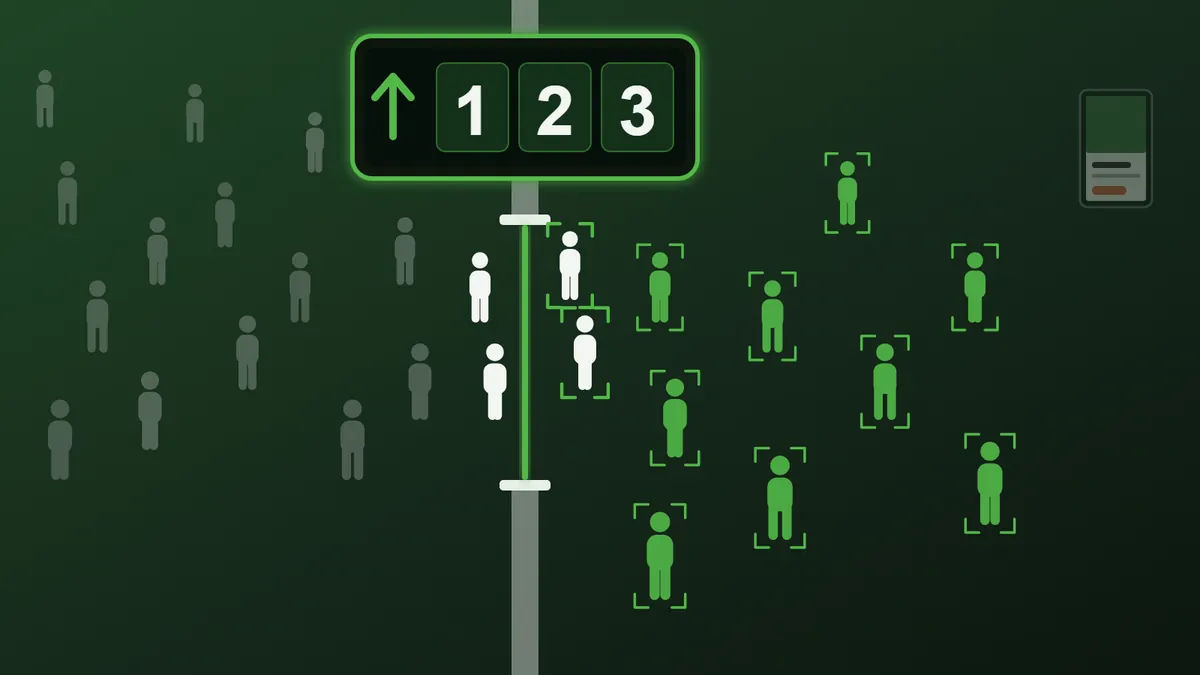
An advert plays on a store screen every few minutes. At the end of the campaign, the retailer sends the advertiser a report saying it played. The report doesn’t say who was there.
That gap is what IAB Europe’s latest proposal for in-store retail media sets out to close.
What has been proposed
In September 2026, IAB Europe, the European-level association for the digital marketing and advertising ecosystem, opened a draft standard for measuring in-store retail media and asked the industry to comment. It is the second version of its in-store standards; the first was finalised in December 2024. It is still a draft, and it may change before it is final.
The central shift is simple to state. IAB Europe’s draft says: “Ad Play is not the right starting point for media measurement; footfall is.” The audience for an in-store campaign starts with the number of shoppers in the store, not the number of times an advert was shown.
From there the draft builds a single, shared way to estimate the opportunity to see an advert. It uses six inputs:
- average daily footfall
- number of stores
- number of days
- number of placements in store
- aisle penetration, the share of shoppers who walk past
- the campaign’s share of voice
It keeps the five store zones from the first version, from outside the store through to the aisles, and adds guidance on how each is measured. It also keeps a separate section on sales, and sets its reporting windows at 28 days before and after exposure.
Why footfall changes the conversation
Today, two retailers can both report “impressions” and mean quite different things. One counts every time a screen played an advert. Another estimates how many people passed. An advertiser comparing the two is comparing methods, not audiences. That is the problem for anyone buying in store digital advertising.
Starting from footfall gives everyone the same first question: how many people were actually there?
The difference in practice:
| Compared on | From ad plays | From footfall |
|---|---|---|
| First question | How many plays? | How many people? |
| Tells you | The advert ran | Who could have seen it |
| Comparing retailers | Methods differ | Same starting count |
| Rests on | A play schedule | A count, or stated assumptions |
| Leaves out | Who was there | What they did next |
The draft is also frank about where the numbers come from. Inside the store, where a retailer has no sensors, it says the assumptions behind the calculation “effectively are the measurement”. So it asks retailers to disclose those assumptions. That is a useful discipline. If your audience figure rests on an estimate, say so.
What a measured count looks like
A count at the door answers the first input directly. The draft itself lists door scanners as one way to measure footfall. You know how many people came in and went out, hour by hour, and when the store was busiest. You are not working back from an estimate.
This is the job DisplayPulse does. It counts people entering and leaving and shows peak hours, so a media team has measured figures to put in front of an advertiser. The counting happens on the device and no faces are stored, which matters when the draft itself notes that sensor-based measurement might have GDPR implications.
You don’t need a screen to do it. DisplayPulse’s Count plan works sensor-only, with no screen at all, so a retailer who only wants an accurate door count can have exactly that. If you do run screens and want to go further, DisplayPulse also reports attention and dwell.
What footfall does not tell you
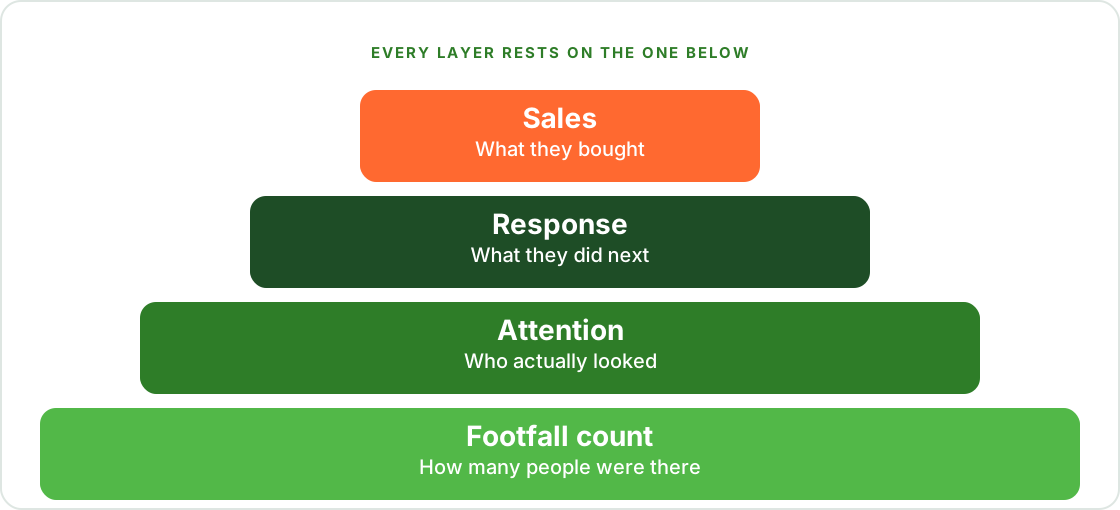
Footfall tells you who could have seen the screen. It does not tell you what they did next. Knowing that people were present is not the same as knowing an advert changed what they bought. The draft deals with sales in a section of its own, with its own measures, for that reason.
That is not an argument against counting people. It is an argument for getting the foundation right first. Every claim about attention, response or sales is only as reliable as the audience number underneath it.
Questions people ask
What is retail media?
Retail media is advertising sold by a retailer on its own channels, such as its website, its app and the screens in its stores. Brands pay to reach the retailer’s shoppers where they are already buying.
What is a retail media network?
A retail media network is the advertising business a retailer builds around those channels. It sells the space to brands, runs the campaigns and reports back on how they performed.
How is in-store retail media measured?
IAB Europe’s draft says it should start from footfall, not from how many times an advert played. It estimates the opportunity to see an advert from six inputs: footfall, number of stores, number of days, placements in store, aisle penetration and share of voice. Where a retailer has no sensors, it asks for the assumptions to be disclosed.
How do you measure footfall in a store?
Count people at the entrances. A door count records how many people come in and go out, hour by hour, so you can see when the store is busiest. IAB Europe’s draft lists door scanners as one way to do it.
What is footfall data?
Footfall data is the count of people entering a store over a period of time, usually broken down by hour and day, with the peak times picked out. In the US it is more often called foot traffic. It is the number every other in-store audience figure is built on.
What to do now
IAB Europe’s draft is open for comment until 23 October 2026. If you sell or buy in-store media, read the draft and share your view using the contact on its final page.
Two questions are worth asking of your own network in the meantime:
- If an advertiser asked how many people were in your store during their campaign, could you answer with a count rather than an estimate?
- If a figure in your report rests on an assumption, is that assumption written down?
If the answer to either is no, that is where to start.
DisplayPulse counts people and vehicles anonymously, on the device, and turns the counts into reports a media team can export and share with an advertiser. See how people counting works, what it measures in retail, or book a demo.